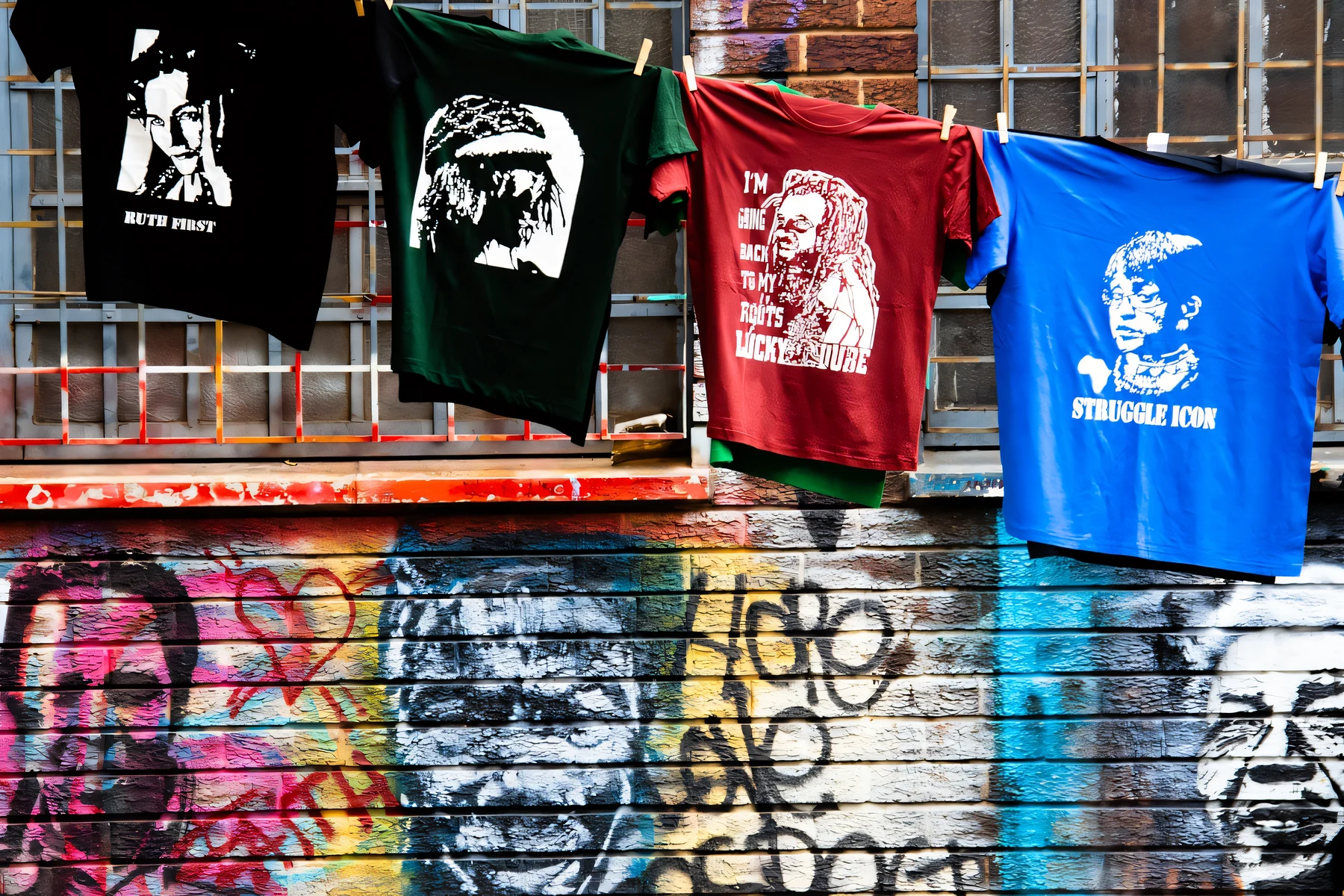
Some brands arrive with a glossy launch video and a slogan nobody remembers a week later. GALXBOY started in a car in Mamelodi, which is a far better test of whether a brand has a pulse. If people wanted the T-shirts, Thatiso Dube had a reason to keep going. If they did not, the whole thing stopped there.
Dube’s story works because it is bluntly ordinary at the start. He was still in high school when he made T-shirts for a small group of friends. Then other learners wanted the same designs, and the idea changed shape. He began saving lunch money for days just to buy more stock to sell. That is not branding theatre. That is a teenager treating a cash problem like a business problem.
From schoolyard demand to a real label
The first lesson in GALXBOY’s story is that demand can show up before you feel ready for it. Dube did not start with a retail strategy deck or a polished identity package. He started with one design, a few friends, and the kind of simple repetition that turns a side hustle into a trade.
After spending time in the fashion industry, he made the move official and launched GALXBOY in 2012. That date matters. It shows this was not a pandemic-era opportunistic brand that popped up online and caught a lucky wave. The label had already been around for years before the big relaunch story began.
The early appeal was easy to understand. Streetwear works when it feels close to the people wearing it. GALXBOY came out of a real South African setting, not a borrowed aesthetic. That made the brand easier to recognise and harder to fake. Consumers could see the difference between a label that understood local style and one that was simply trying to sell an image.
Dube’s background also explains why the brand has always carried more weight than a logo on a shirt. A young founder who started by moving stock from a car boot is not selling fantasy. He is selling evidence that the business came from somewhere specific, with all the mess and uncertainty that usually gets edited out of founder stories.
The shutdown that should have ended it
GALXBOY did not glide through its first chapter. In 2017, the business shut down after running into serious challenges. The public story does not go into a neat list of causes, and that is probably part of why it feels believable. Most businesses do not die because of one dramatic collapse. They wear down. The money gets tight, the pressure builds, and the room for error disappears.
For a young fashion brand, that kind of collapse can be fatal. Stock has to move, suppliers need paying, customers still expect the next release, and the brand still has to look alive even when the numbers are ugly. Closing the doors in 2017 was a hard stop, not a pause.
What makes the GALXBOY story worth paying attention to is that the shutdown did not become the ending people expected. Dube came back. He did not hide the failure behind a new name or pretend it had never happened. He returned to the same label and relaunched it in 2020. That decision changes how the brand reads. A comeback only matters if the original fall was real.
The relaunch was not a soft restart
The 2020 return was not a quiet reset. GALXBOY took off quickly after the relaunch, and the scale now is hard to ignore. The business operates 17 stores across the country, employs more than 200 people, and processes about 30,000 online orders every month.
Those are not small numbers for a streetwear label that started with handmade momentum and a car full of T-shirts. They point to a business that has moved beyond local hype into repeatable retail. Seventeen stores mean the brand has to manage rent, stock flow, staffing, merchandising, and customer expectations across multiple locations. More than 200 employees means the business is no longer just a founder and a few helpers. It is a proper operation with payroll, structure, and pressure.
The online order figure tells its own story. Thirty thousand orders a month is not the kind of number you get from curiosity alone. People are not just browsing GALXBOY. They are buying it, often at scale, and doing it through a channel that demands constant fulfilment discipline. If the product was only riding on nostalgia or social media noise, that number would wobble. Instead, it suggests a brand that has learned how to convert attention into sales.
Dube’s advice sounds simple because the hard part is doing it
Dube’s advice to younger entrepreneurs is direct: “Believe in yourself, stay consistent, and never stop pushing your product.”
That line is simple enough to print on a wall, but the point is not the wording. The point is that the comeback seems to have been built on exactly those habits. Belief gets the first move made. Consistency keeps the customer from forgetting you. Pushing the product keeps the business in the market long enough to survive the ugly months, not just the launch week.
There is nothing glamorous about that formula, and that is why it lands. The fashion industry is full of people who talk about brand identity as if it descends from the sky. Dube’s version is more grounded. Make the product. Keep it visible. Keep selling. Keep showing up after the setback.
That is also why GALXBOY feels like more than a retail success. The story has a plain-spoken moral that consumers can actually use. A brand does not earn trust only because it looks local or sounds local. It earns trust by surviving, adjusting, and proving that it can keep its promises after the first wave of excitement fades.
Why shoppers still care about the origin story
Consumers do not only buy clothes. They buy a story about where the brand came from and whether that story feels honest. GALXBOY has an origin that is difficult to fake. A student making shirts for friends. Lunch money turned into stock. A formal launch in 2012. A shutdown in 2017. A relaunch in 2020. Then rapid growth into a business with stores, staff, and serious online volume.
That sequence gives the label something many brands try to manufacture after the fact, which is credibility. Not polished credibility, but earned credibility. The kind that comes from having already been knocked down and still being in the game.
The larger lesson is not that every small brand will become a national name. Most will not. The lesson is that the first sale can matter more than the first logo concept, and the first setback is not always the end if the founder has the stamina to return. GALXBOY is proof that a brand can start with one shirt, one buyer, and one stubborn person in the middle of it all, then grow into something much bigger.
This account draws on a recent BusinessTech profile of Thatiso Dube and GALXBOY. If a South African brand has already gone through failure, rebuilt itself, and now runs 17 stores while filling tens of thousands of online orders a month, the real question is not whether the story is good. The question is simple: would you back it?